CVWiser blog
Jobscan Alternative: Jobscan vs CVWiser for Honest Application Packages
Looking for a Jobscan alternative? Compare Jobscan's Match Rate scanner with CVWiser profile-locked packages, Trust Diff, and consistency. When each tool is the better fit.
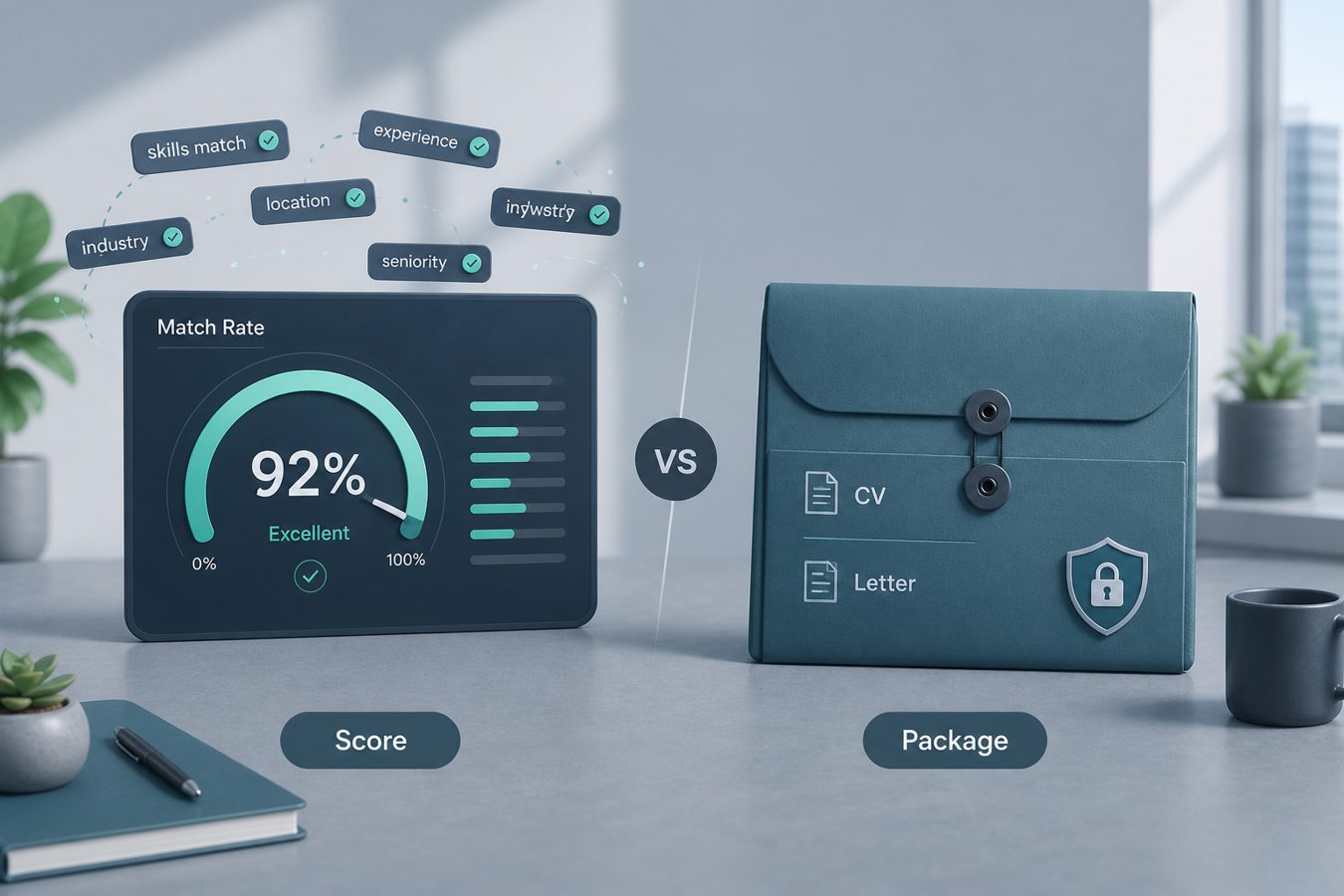
If you are searching for a Jobscan alternative, start here. If you search for ATS help in 2026, Jobscan is usually on the first page of results. It built its reputation as a resume-to-job-description matcher: paste (or upload) your resume, paste the JD, get a Match Rate and a list of missing keywords. This is not a takedown. Jobscan is useful for a lot of serious searches. The useful question is whether you mainly need a deep keyword diagnostic, or a package system that produces a tailored CV + cover letter without inventing your career. (Category map first: best ATS resume tools. Builder angle: CVWiser vs Rezi. Tracker angle: Huntr vs CVWiser.)
What Jobscan does well
Per Jobscan’s product pages, the core loop is:
- Match Rate against a specific job description (hard skills, soft skills, title, education, and related signals, depending on the scan)
- Keyword gap lists so you can see what the posting emphasizes that your resume does not say
- Power Edit / optimizer-style editing that updates scores as you revise
- ATS-oriented formatting and parseability guidance, including advice tied to common systems in their materials
- LinkedIn and cover letter optimization in the same scanning mindset
- An AI resume builder / coach path for drafting a base resume, then carrying it into job-specific matching
That combination is strong if your bottleneck is diagnosis: “I have a real resume, but I cannot see which requirements I am underselling.” Career coaches and outplacement workflows have used Jobscan for years for exactly that reason.
Always check Jobscan’s current pricing before you commit. Free scan caps and paid tiers change; ignore third-party “$X/mo” screenshots when the official page disagrees.
The tradeoff: optimizing for a score is not the same as getting hired
A Match Rate is a proxy. It is not the score the employer’s ATS secretly assigns you, and it is not a hiring manager’s opinion. Treating 90% as a finish line pushes a predictable failure mode: stuffing skill lists and rewriting bullets until the tool is happy, even when the line is not interview-defensible. Longer version: keyword stuffing vs real match.
Keyword tools do not invent your career by themselves. People do, when they paste missing JD terms into experience they never had. AI rewrites and “add this skill” suggestions make that faster. Same category-wide risk we cover in how to fact-check an AI-tailored resume and quality vs quantity.
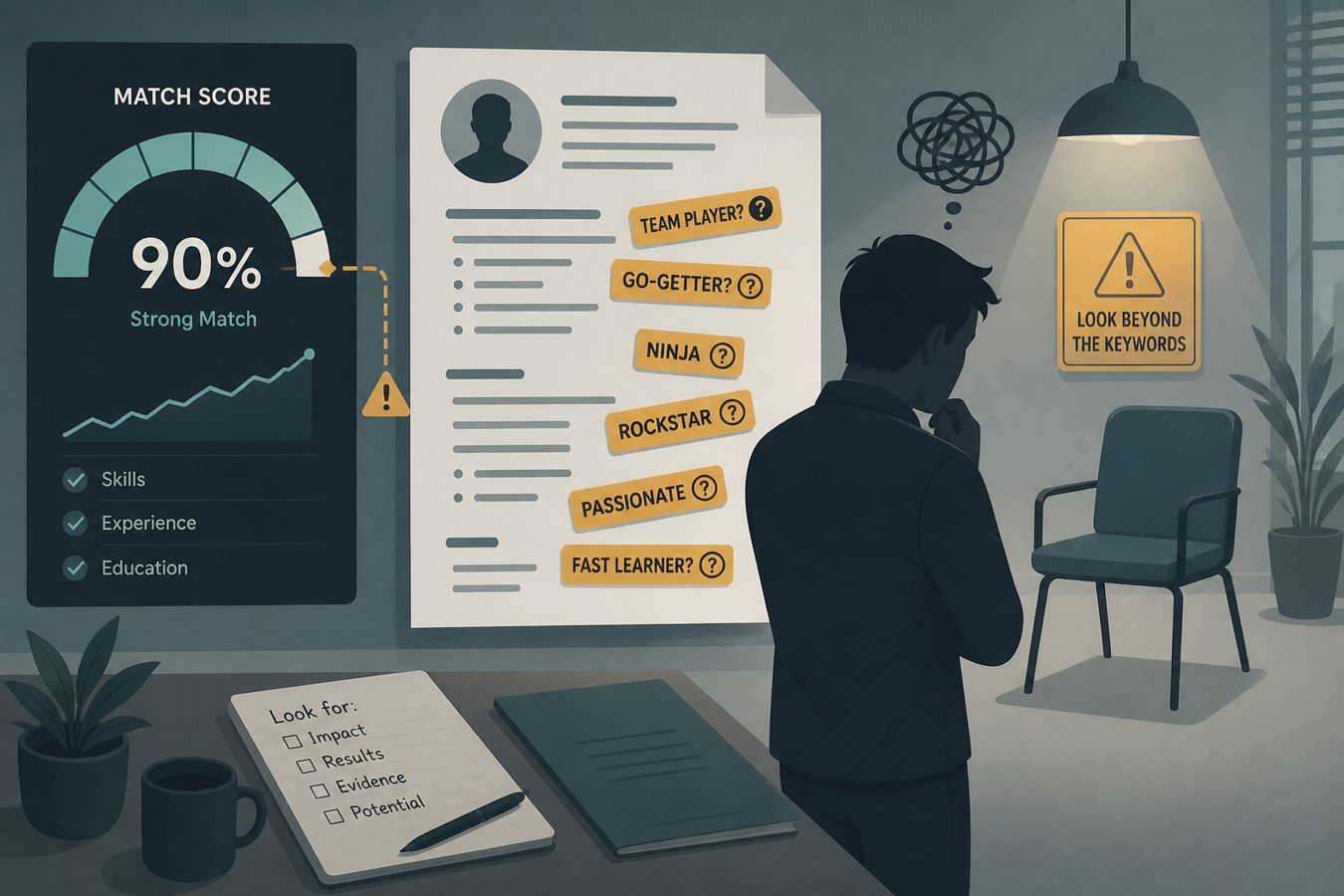
Use Jobscan as a mirror, not a mandate. If a missing keyword is real in your work, add it in honest language. If it is not, leave the score lower and move on.
Where CVWiser takes a different approach
CVWiser is built around a master profile → per-job application package, not a standalone scanner.
- Package generate rewrites summary, refines bullets on existing roles, and reorders skills you already saved. It cannot add employers, titles, dates, education, or new skill names at generate time.
- ATS match is part of the package loop (including extension capture with match before a generation credit; extension guide). It is directional for that posting, not a claim that we simulate every named ATS vendor the way a dedicated scanner markets itself.
- Trust Diff shows what changed versus your profile snapshot (walkthrough).
- Consistency check compares CV and cover letter in the same package before export (why).
- You still review free-text metrics and any editor-chat additions yourself.
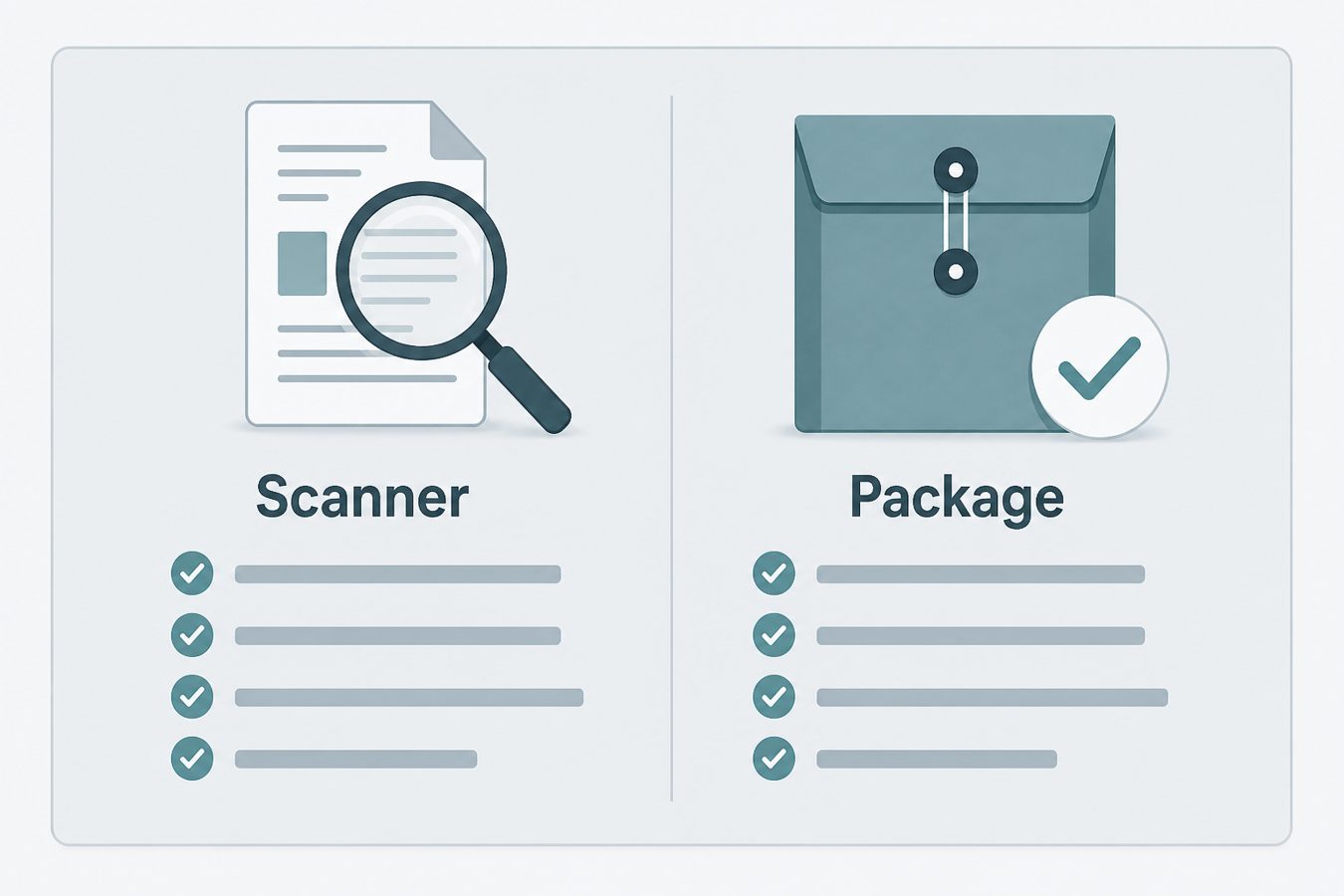
CVWiser’s center of gravity is the exportable package you can defend. Jobscan’s center of gravity is the diagnostic against one JD.
Where Jobscan is still the stronger pick
Be honest about the other side:
- If you want the deepest keyword / gap analysis and LinkedIn scan against a target role, Jobscan’s scanner heritage is hard to beat.
- If a coach or university career center already standardized on Jobscan, stay in that workflow for audits.
- If you only need occasional scans on a resume you already trust, Jobscan’s free tier (whatever the current cap is) may be enough without changing your whole stack.
CVWiser is newer and is not trying to out-Jobscan Jobscan on named-ATS simulation depth. If your only question is “which JD keywords am I missing on this PDF?”, start with Jobscan (or use both: Jobscan as the audit, CVWiser as the package you actually send).
The actual comparison
| Jobscan | CVWiser | |
|---|---|---|
| Primary job | Resume ↔ JD Match Rate + keyword gaps | Profile-locked application packages |
| Starting point | Existing resume (or builder → optimizer) | Master profile you build once |
| Match / score | Deep Match Rate + gap lists | Package / extension match for the captured job |
| AI resume approach | Builder / coach + optimize toward the JD | Generate from master profile only |
| Fabrication risk | High if you chase score with unchecked keywords / AI | Employers / titles / skills locked at generate; review metrics + chat |
| Change visibility | Manual review of edits | Trust Diff vs profile snapshot |
| CV + letter consistency | Separate optimize / review | Same-package consistency check |
| Tracking | Not the core product | Per-package status, notes, follow-ups |
| Best for | Diagnostic keyword audits | Fewer, high-integrity tailored applies |
| Pricing | See Jobscan plans (free scans + paid) | Free (3 packages/mo) / PAYG / Pro |
Frequently Asked Questions
Is CVWiser a Jobscan alternative?
Yes if you want tailored CV and cover letter packages from a locked profile, not only a Match Rate. Jobscan is still stronger as a deep keyword diagnostic.
Does CVWiser replace Jobscan's Match Rate?
No. CVWiser match is directional for the captured posting. It is not a claim that we simulate every named ATS the way a dedicated scanner markets itself.
Can I use both?
Yes. Use Jobscan (or another scanner) as a mirror, then send a package you can defend. Do not stuff keywords you cannot explain (keyword stuffing vs real match).
Will CVWiser invent skills to raise a score?
Package generate cannot add employers, titles, dates, education, or new skill names. Prompts tell the model not to invent exact numbers; still review Trust Diff before export.
Does match preview use a generation credit?
No. Capture and match preview do not use a package credit (rate-limited). Generating a package does.
The short version
Pick Jobscan if you already have a resume and need a serious keyword / Match Rate audit before you submit. Pick CVWiser if you want each tailored CV + letter produced from a locked profile, with Trust Diff and consistency before export. Many careful searches use a scanner for diagnosis and a honesty-first package tool for the documents that go out the door. CVWiser’s free plan is 3 application packages a month, no card required. Try it on a fresh application. For the broader thesis, see what CVWiser is really fighting. Format basics still matter either way: ATS resume format checklist.