CVWiser blog
How to Fact-Check an AI-Tailored Resume Before You Apply (2026)
AI resume tools can invent metrics, inflate titles, or lift skills from the job description. Use a claim ledger, a change review, and an interview test before you hit send.
AI resume builders are mainstream in 2026. So is the failure mode that comes with them: a polished PDF that sounds stronger than your real career. Industry write-ups keep documenting the same pattern. Models invent or stretch metrics, quietly inflate titles or scope, and inject tools named in the job description that you never used. Recruiters and hiring managers are adapting interview questions to catch it.
If you use AI to tailor a CV to a job description, the goal is not to sound impressive. It is to send a version of yourself you can defend on a call. That means a short fact-check every time, not a hopeful skim of the export. Fix ATS-readable format first if the file fails a plain-text paste.
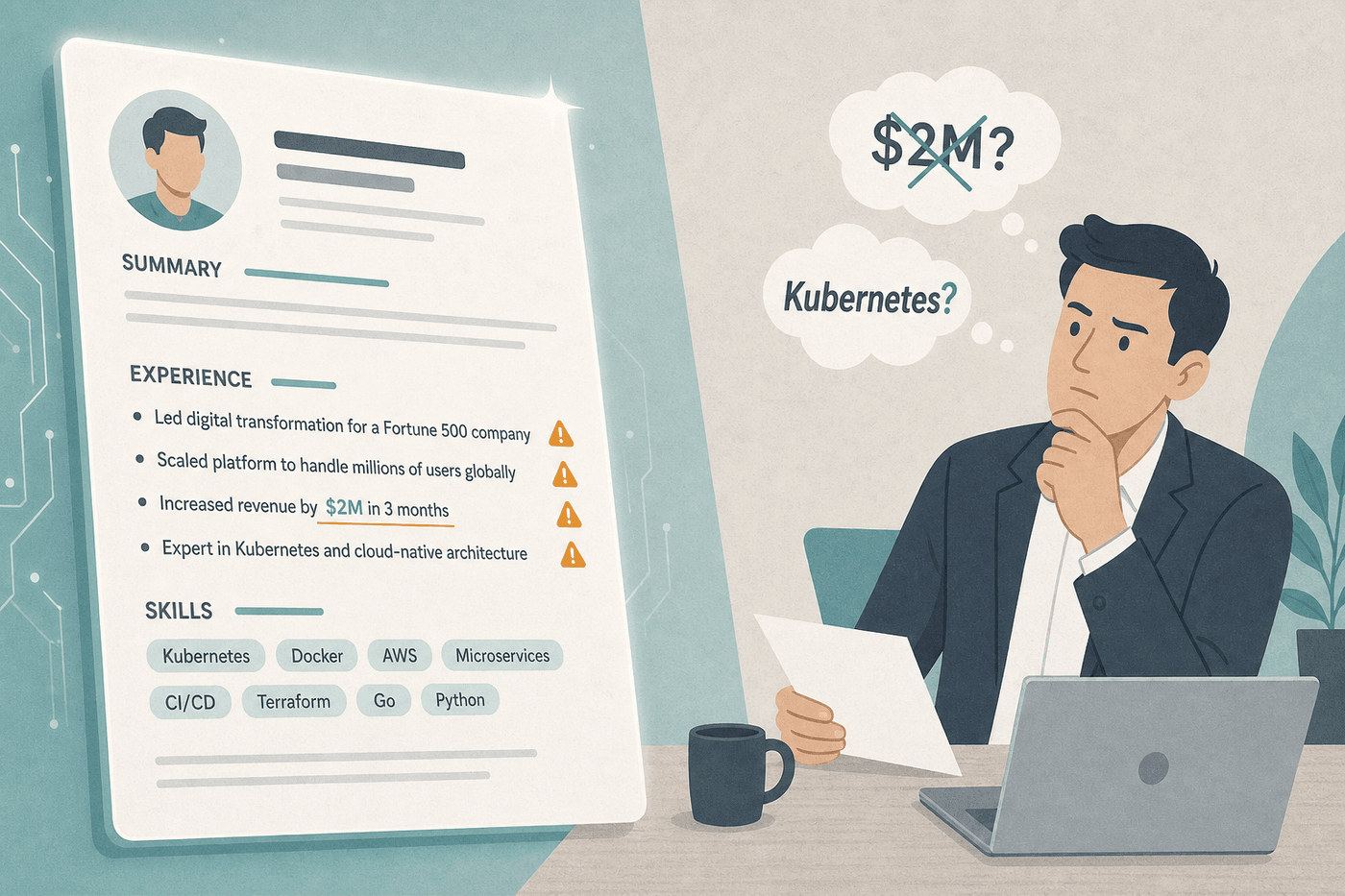
Why polished is not the same as true
Keyword pressure is the engine. When a tool’s job is “match this posting,” truth becomes optional. That shows up as:
- Invented or rounded metrics (“drove $2M ARR”) that never lived in your notes
- Title or scope inflation (Lead / Senior / owned end-to-end) beyond what you actually did
- Skill injection from the JD (Kubernetes, Salesforce, a framework you only read about)
- Conflation stitching true facts from different roles into one bullet that is coherent but wrong
We break down why that market exists in what CVWiser is really fighting. The practical response is a repeatable review, not another round of AI polishing.
Step 1: Build a claim ledger from your master profile
Before you trust any tailored export, freeze a source of truth. Your master profile (or a one-page “truth doc”) should list, for each role. Full build guide: master profile before you tailor.
- Exact employer and title as you would say them out loud
- Start and end dates
- Skills and tools you actually used
- Metrics you can explain (how measured, over what period, your part vs the team)
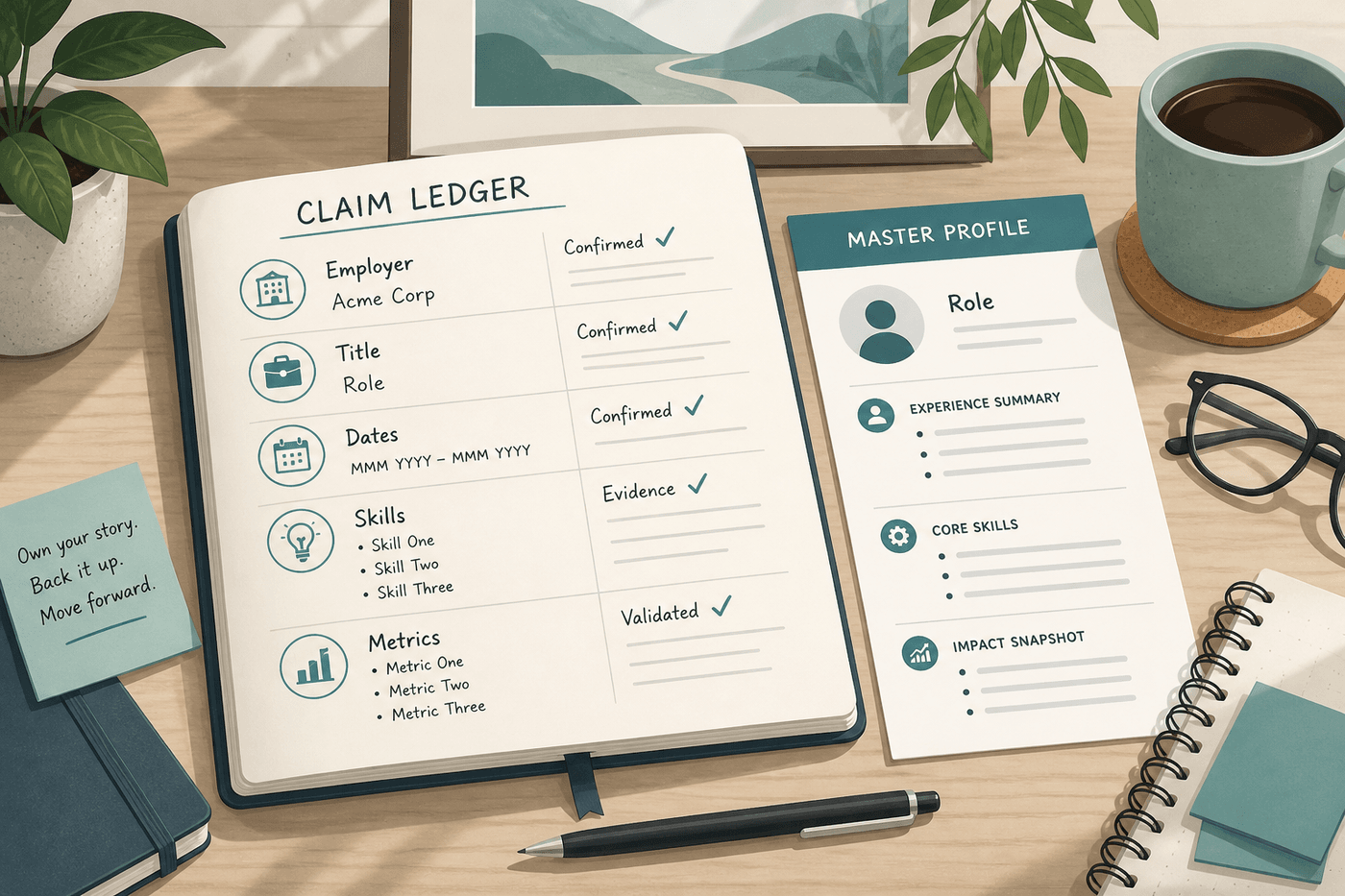
Anything not on that ledger is out of bounds for the application package. Honest tailoring reorders and reframes. It does not mint new history.
Step 2: Review what the AI changed
Do not only read the final PDF top to bottom. Ask: what is different from my ledger?
If the tool shows a change view, use it. In CVWiser, that is the trust diff: summary before/after, experience bullets marked updated, and skills reorder against a profile snapshot from generate time. Scan for surprises first. Then read for flow.
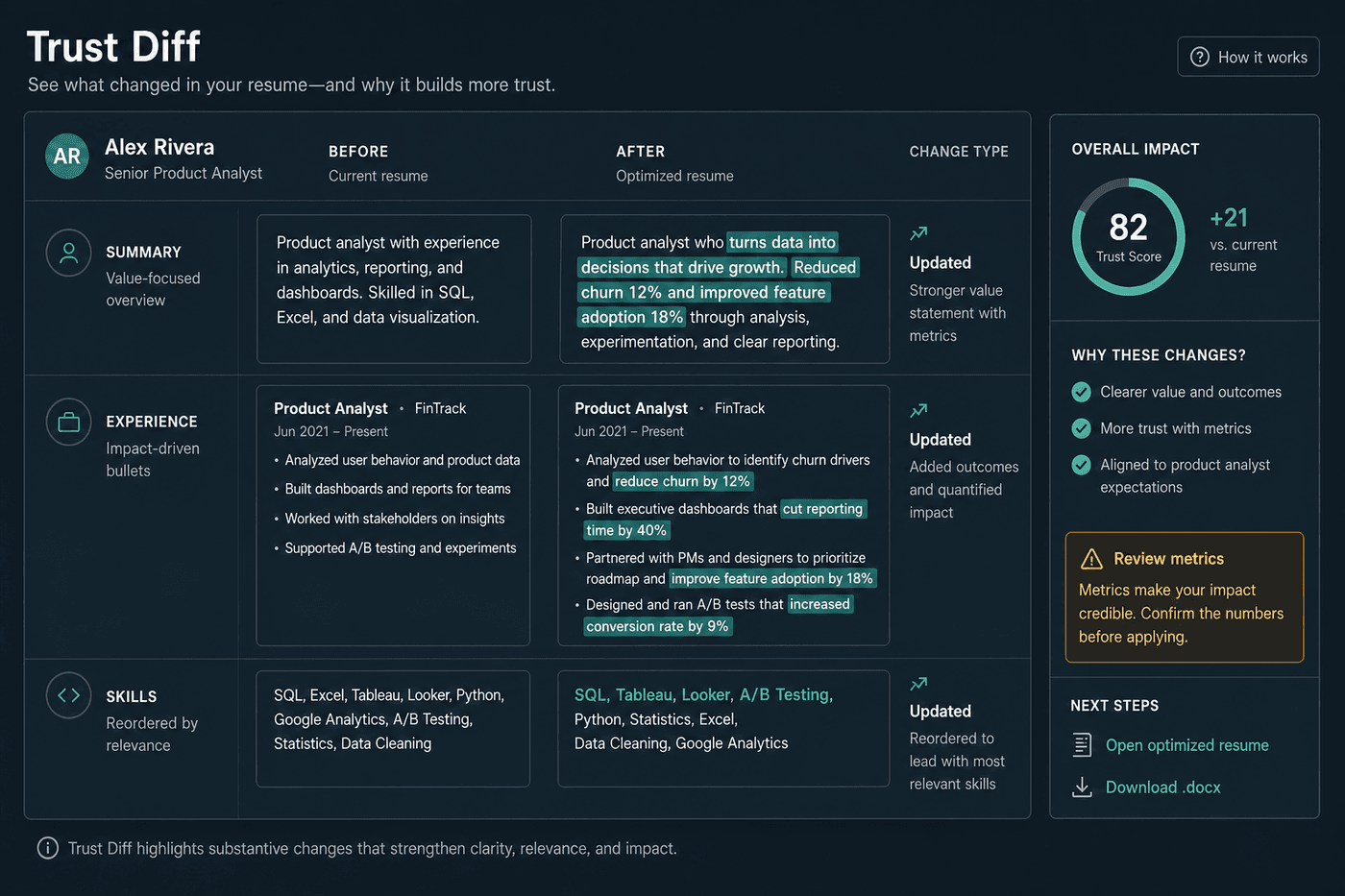
If your tool has no diff, paste the tailored version next to your ledger and check every bullet that looks “new and impressive.”
Step 3: Run the interview test on every claim
For each edited line, ask out loud:
- Can I explain this project or number in 60 seconds without hedging?
- Would my manager or a reference agree with this framing?
- Did this skill or tool appear in my ledger, or only in the job description?
If the answer is fuzzy, cut or rewrite before export. Fake confidence dies in the first technical screen. That risk is also why AI cover letters need the same discipline: if the letter claims a metric the CV never earned, you fail twice. How to attach honest numbers: quantify resume bullets without inventing.
Step 4: Check that the cover letter still agrees
Tailoring the CV and generating a letter separately is how document drift happens: mismatched titles, dates, seniority, or a project that exists in only one file. After the CV passes the interview test, run a consistency pass on the letter. Export only when both documents tell one story.
Step 5: Prefer fewer, verified packages
Mass applying with unverified AI output is how you burn weeks. Data still favors fewer, better-targeted applications. A five-minute fact-check per package is cheaper than an interview you cannot finish.
Where CVWiser fits
CVWiser is built for this workflow, not for from-scratch fiction:
- Package generate is locked to your master profile: it can rewrite summary, refine bullets on existing roles, and reorder skills you already saved. It cannot add employers, titles, dates, education, or new skill names.
- Trust diff shows those wording and order changes against your profile snapshot.
- Consistency check bridges CV and cover letter in the same package before export (or an acknowledged skip).
- Prompts discourage inventing exact numbers; you still run the interview test on free-text bullets. Editor chat can add facts you explicitly provide when you ask.
If you want that loop on a real posting, start a fresh application package (3 free packages a month, no card required), or compare approaches in CVWiser vs Rezi, Jobscan vs CVWiser, and best ATS resume tools. Capture-and-match before you spend a credit is covered in the Chrome extension guide.
The short version
Treat every AI-tailored resume like unverified code. Keep a claim ledger, review what changed, run the interview test, then align the cover letter. If you drafted in ChatGPT, start with ChatGPT for your resume without lying. For the rehearsal side of that test (60-second explains and catch questions), see interview defense for AI resumes. For employment breaks without inventing fillers, see how to explain a career gap. For whether recruiters “detect AI” at all, see can recruiters tell you used AI on your resume?. Tools that constrain generation to your profile and show a trust diff make that faster. Tools that optimize only for keyword match make it mandatory. Either way, do not hit send on a line you cannot defend.