CVWiser blog
Master Profile Before You Tailor: The Source of Truth for Honest Applications
Build one complete master profile before you tailor any CV. Roles, dates, skills, metrics, and eligibility fields once. Then reframe for each job without inventing experience.
Most people tailor from the wrong starting point: last week's PDF, a half-updated LinkedIn export, or whatever the AI invents to fill gaps in the job description. That is how you get three versions of the same job title, a metric you cannot explain, and a skills list that belongs to the posting more than to you.
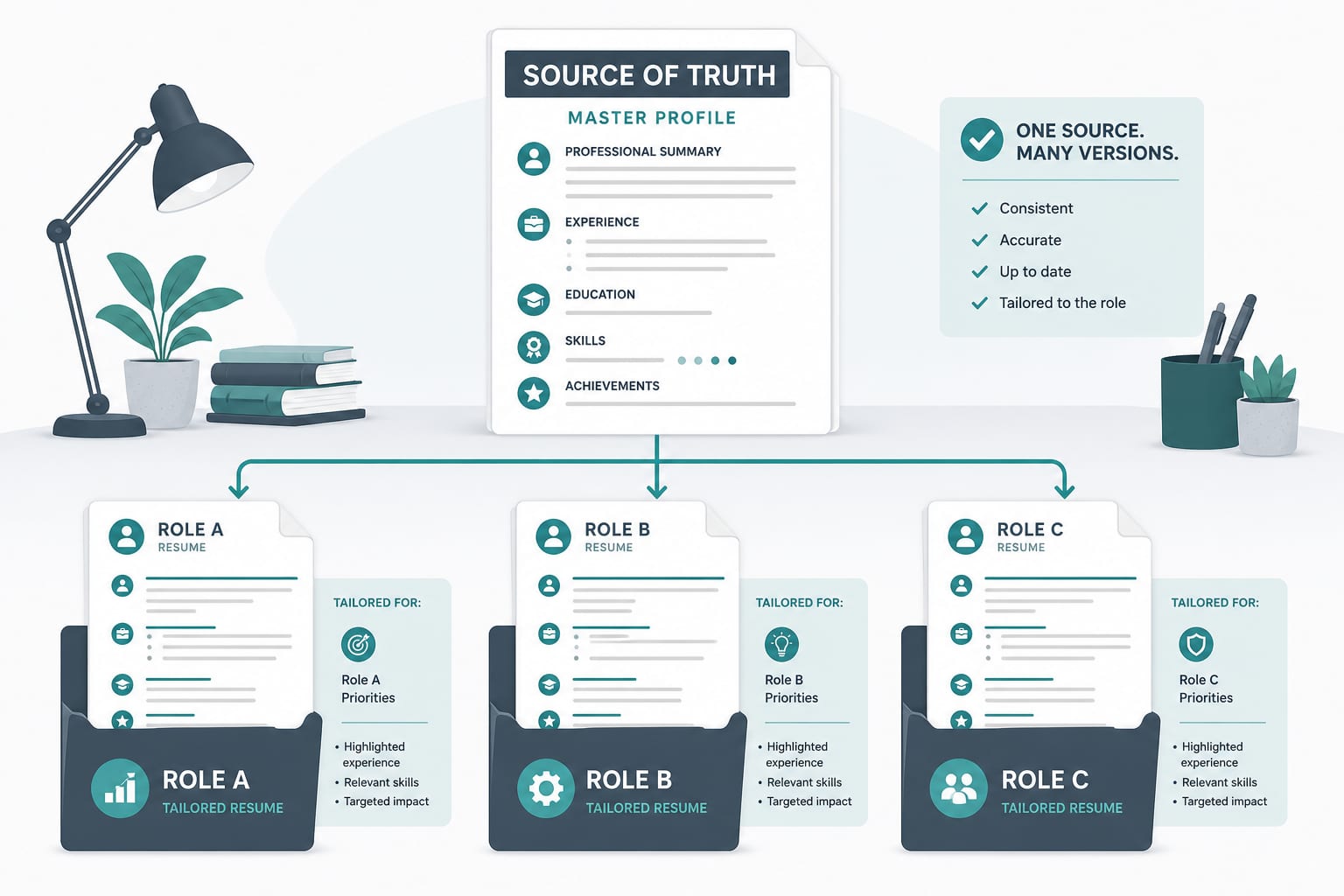
A master profile is the fix. Fill one complete, honest source of truth once. Every tailored package is a reframe of that profile, not a new career invented for the ATS.
This sits upstream of scanning a posting in 2 minutes, tailoring without lying, and fact-checking AI output.
The short answer
- One master profile with employers, titles, dates, education, skills, and metrics you can defend.
- Eligibility fields belong there too: location, work authorization, languages, timezone, years of experience.
- Per-job packages reorder and rephrase from that profile. They do not mint new employers or skills.
- Review every export against the profile (Trust Diff, fact-check).
- Format still matters after content is true (ATS format checklist). Length comes next: one page vs two pages. The summary line gets its own cut: resume summary without fluff. Gaps stay honest: how to explain a career gap.
Why a generic "base resume" is not enough
A base resume PDF is usually a snapshot that drifts. You edit it for one role, save over it, then lose the clean version. LinkedIn is better for networking than as a claim ledger: titles get shortened, dates get fuzzy, and "open to work" edits creep in.
A master profile is different:
| Base PDF / LinkedIn | Master profile |
|---|---|
| One layout you keep rewriting | Structured facts you reuse |
| Easy to overwrite | Source of truth for every package |
| Hard to audit what changed | Diff against snapshot at generate time |
| Easy to invent under pressure | Gaps stay visible until you fill them honestly |
If the profile is thin, AI and manual tailor both invent. If the profile is complete, tailor is mostly order and wording.
What belongs in your master profile
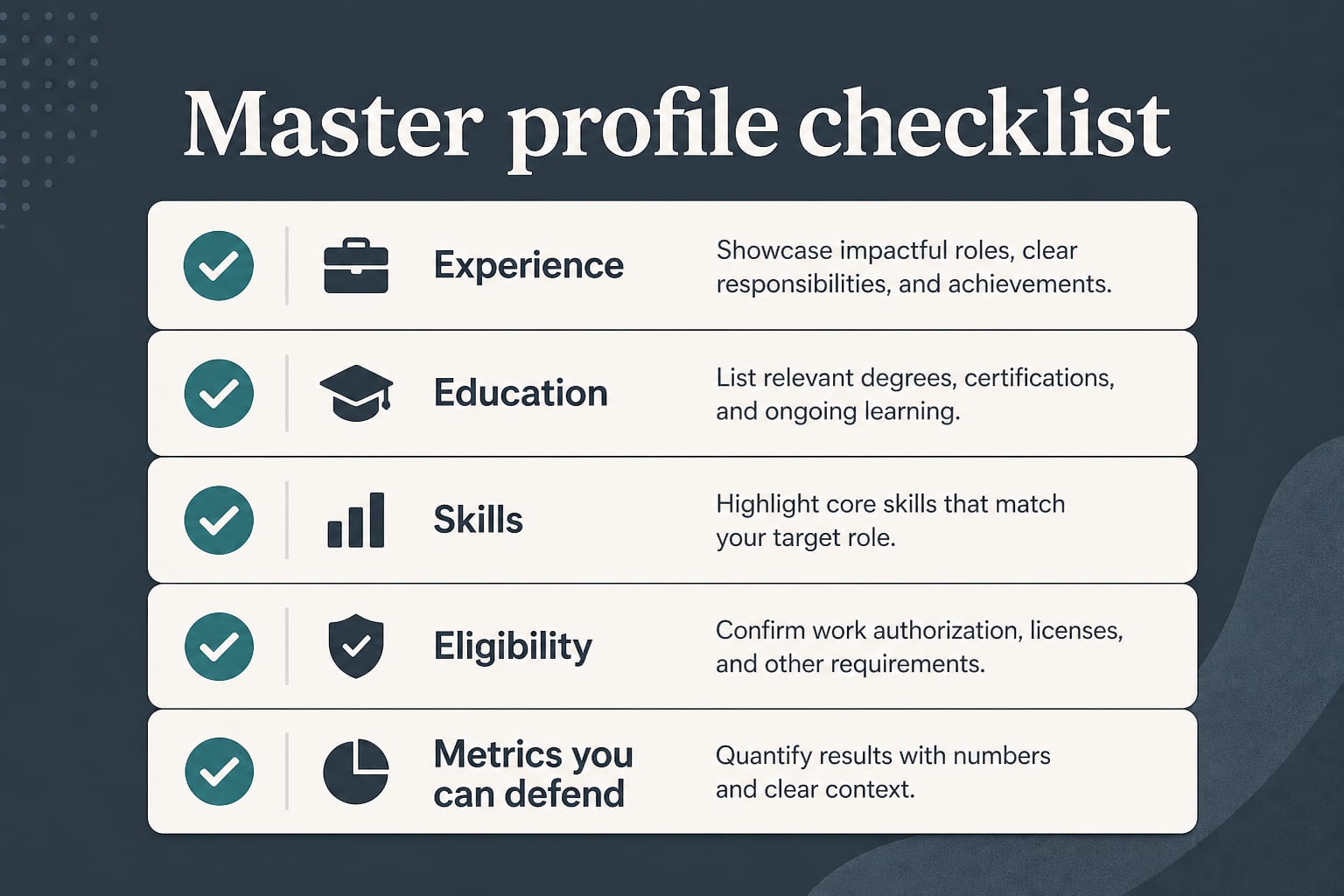
Build it like a claim ledger (fact-check guide):
Identity and contact
Name, email, phone, city/country, LinkedIn URL as text (should I put LinkedIn on my resume?).
Experience (per role)
Exact employer name, exact title you would say in an interview, start and end dates, 4-8 bullets with real scope, tools you used, and metrics you can explain (how measured, your part vs the team).
Education
School, degree, dates, relevant coursework only if true.
Skills
Tools and methods you have actually used. Separate "used in production" from "took a course" in your own notes if that helps you stay honest.
Eligibility
Work authorization, preferred locations, languages, timezone, and years of experience as you would answer a form. These power advisory checks later (eligibility check). They are not a skills match score.
Optional
Certifications, publications, projects with links. Only what you will discuss.
How to build it in one sitting (then maintain it)
- Dump everything from memory, old CVs, and LinkedIn into one place.
- Normalize titles and dates so they match what you will say out loud.
- Delete vanity metrics you cannot defend (interview defense).
- Fill eligibility fields even if you are not applying remotely yet.
- Update after each real job change, not after each application. Applications create packages; they should not rewrite history.
Spend the long session once. Later applications get faster because the truth is already there (quality vs quantity).
From master profile to tailored package
For each role:
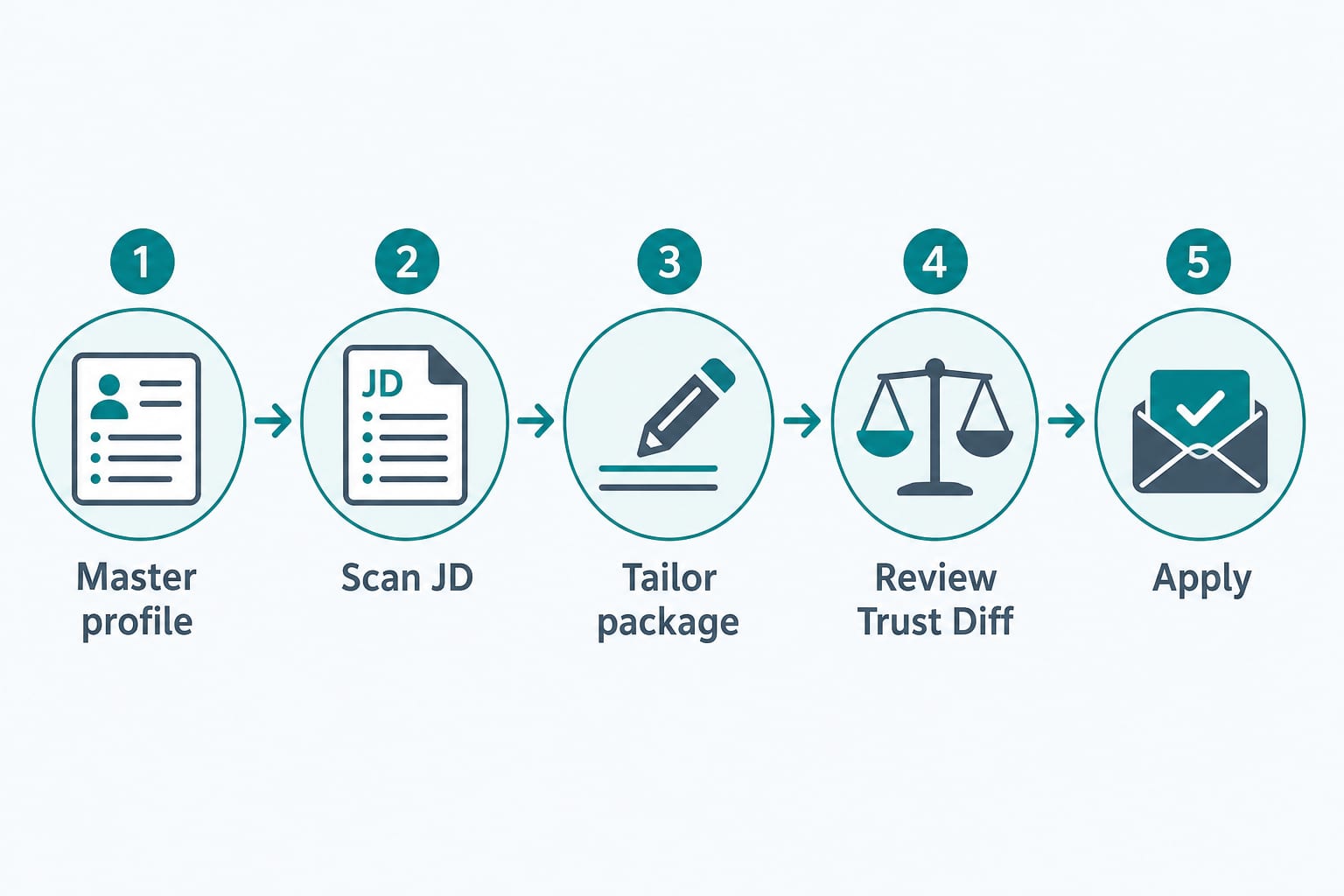
- Scan the JD in 2 minutes. Skip if gates fail.
- Generate or edit a package that pulls from the profile: summary rewrite, bullet reorder, skill priority.
- Reject anything that adds employers, titles, dates, education, or skill names you never saved.
- Open the trust diff. Fact-check numbers.
- Keep CV and letter aligned (consistency check).
- Export a parseable file, apply, follow up on a schedule.
That is honest speed. Keyword stuffing from the JD into Skills is the opposite (keyword stuffing vs real match).
Where CVWiser fits
CVWiser is built around a master profile → per-job application package. You fill the profile once (manual entry, or import where available). Need a PDF with no job posting? Download a baseline CV from Profile (no AI, no generation credit). Package generate can rewrite your summary, refine bullets on existing roles, and reorder skills you already saved. It cannot add employers, titles, dates, education, or new skill names. Prompts also tell the model not to invent exact numbers; still review Trust Diff before export. Chat edits are different: you can add facts you explicitly provide when you ask, so treat chat as less locked than generate.
When eligibility fields are filled, advisory warnings can appear above match score for location, work authorization, language, timezone, or years of experience. They never block generate. They are not legal advice.
Capture postings with the Chrome extension, see match before a generation credit, then export PDF/DOCX. Free plan: 3 application packages a month, no card. Start a fresh package or install the extension. Broader thesis: what CVWiser is really fighting.
Frequently Asked Questions
What is a master resume or master profile?
A complete, structured record of your real experience used as the source of truth for every tailored application. It is not the file you upload to every job.
Should I send my master profile to employers?
Usually no as a raw ledger. For referrals or cold outreach without a JD, export a baseline CV PDF from the profile. For real postings, send a tailored package instead.
How is a master profile different from LinkedIn?
LinkedIn is public and often abbreviated. A master profile is private, detailed, and built for audit: exact titles, dates, metrics, and eligibility fields in one place.
Can AI build my master profile for me?
AI can help draft from an import, but you must verify every employer, title, date, skill, and number. The profile is only useful if it is interview-defensible.
How often should I update my master profile?
When your real career changes: new role, new skill you used, new certification, move or work-authorization change. Not every time you apply.
The short version
Tailoring without a master profile is improvisation under keyword pressure. Build the truth once. Reframe per job. Review what changed. Then format, apply, and follow up. Honesty scales better than inventing a new career for every posting.