CVWiser blog
Interview Defense for AI Resumes: Can You Explain Every Line?
AI-tailored resumes fail in the interview, not only at parse. Use a 60-second explain test, common catch questions, and a pre-call checklist so every line is defensible.
Getting past the ATS is not the finish line. The finish line is a human asking, “Walk me through this bullet,” and you answering without hedging. AI-tailored resumes often look strongest on paper and weakest on the call: a metric you never measured, a tool that lived only in the job description, a title that sounds one level above what you did.
This post is the interview side of honesty. For the pre-send review (claim ledger, change review, consistency), use how to fact-check an AI-tailored resume. For seeing what the model changed, use Trust Diff. For whether recruiters “detect AI” at all, see can recruiters tell you used AI on your resume?. For employment breaks without inventing fillers, see how to explain a career gap. Here: how interviews catch fiction, and a checklist so they do not catch yours.
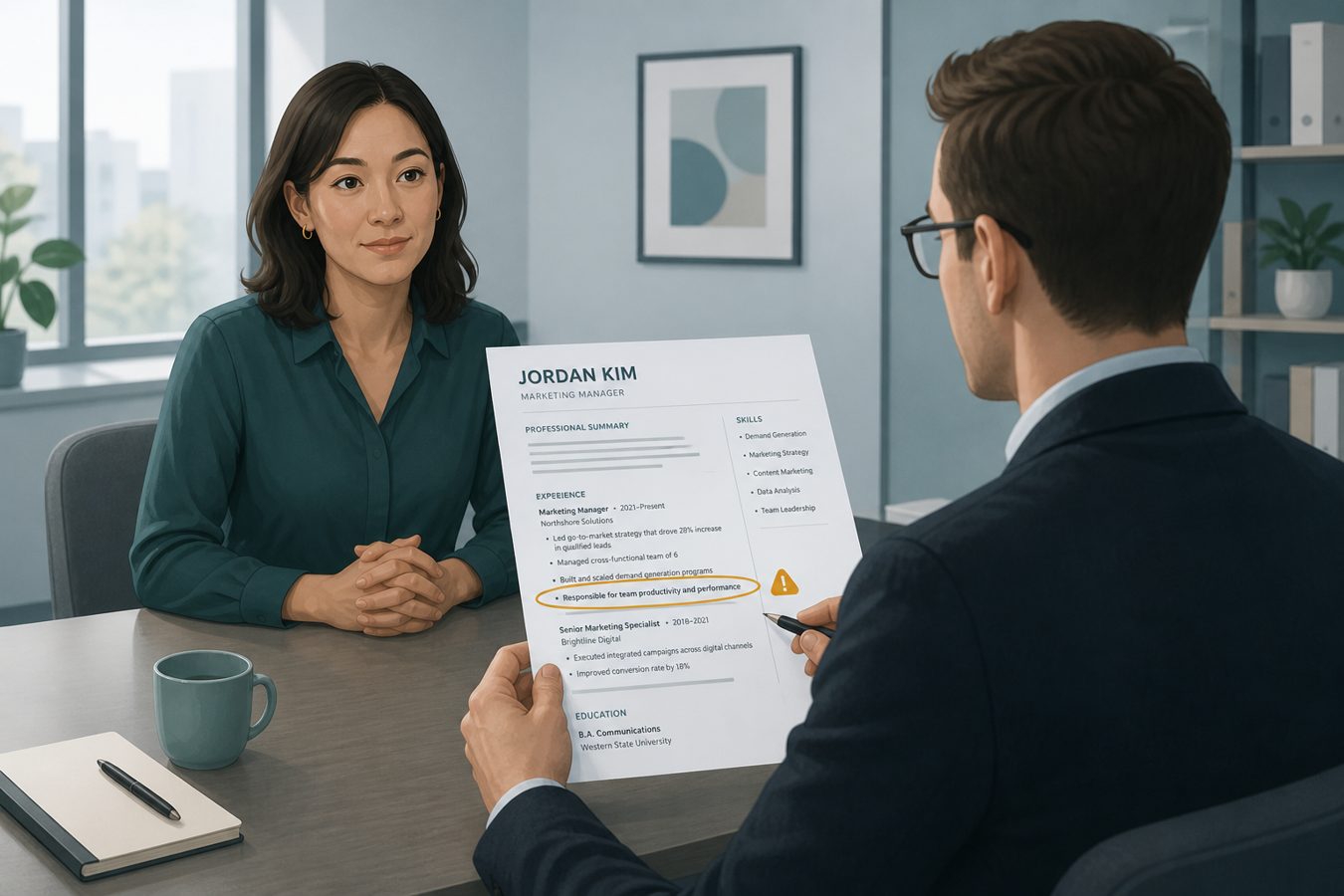
How interviewers spot an AI-inflated resume
Hiring managers do not need a detector. They use normal questions:
- “How did you measure that?”
- “What was your part vs the team’s?”
- “Which tools did you use day to day in that role?”
- “Tell me about a time that number went the wrong way.”
- “Your resume says X your LinkedIn says Y. Which is it?”
Vague answers, long pauses, or a story that does not match the bullet are enough. The same pressure hits cover letters that invent a project the CV never earned. Consistency across CV, letter, and what you say out loud is the real test (consistency check).
The 60-second explain test (do it before you apply)
For every bullet the AI touched (and every metric, even if you wrote it):
- Say the bullet out loud.
- Explain it in 60 seconds: context, your action, result, how you know the number.
- Name one follow-up question you hope they do not ask then answer it anyway.
- If you hedge, cut or rewrite the line. Do not “fix it later.”
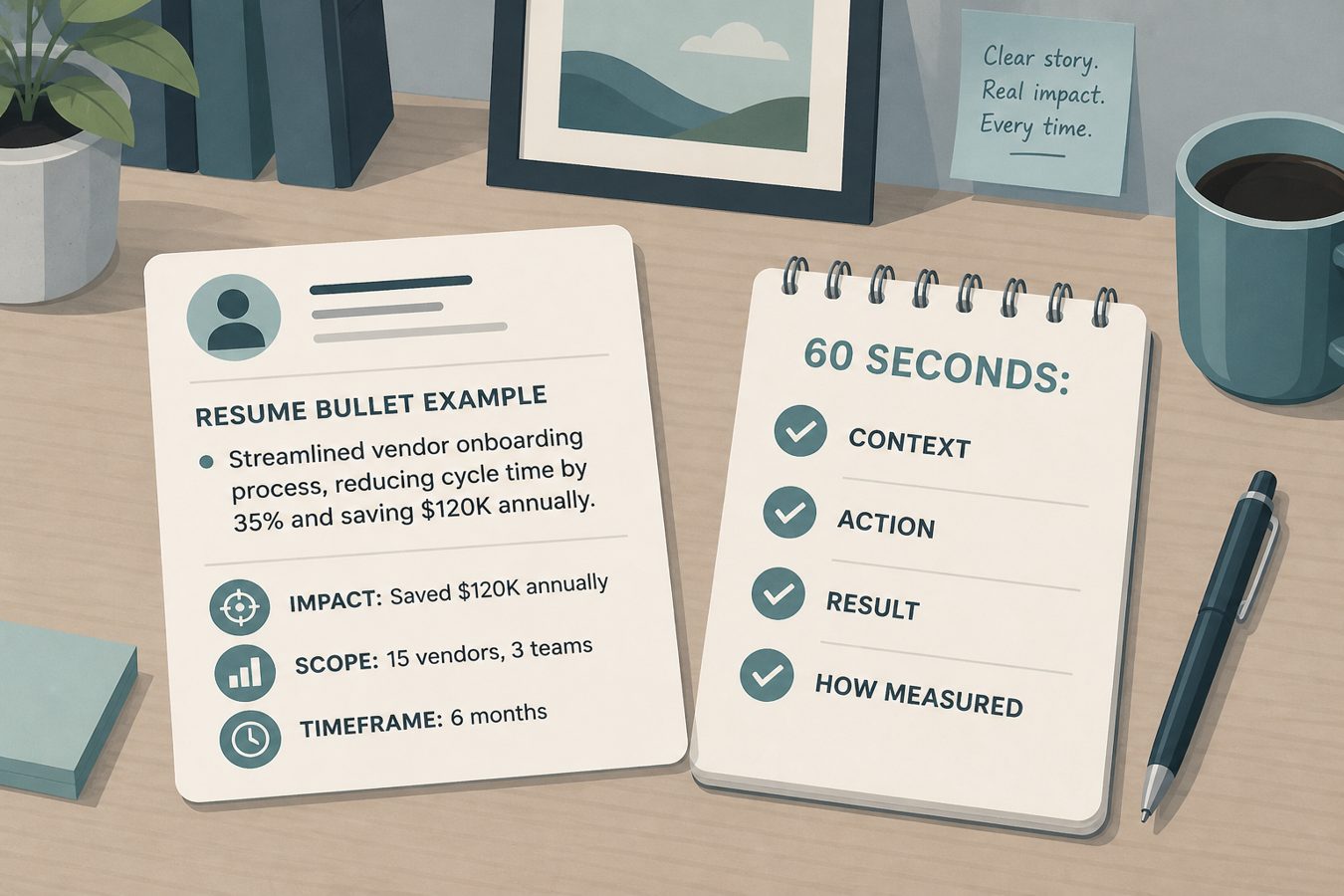
Pass = you sound like someone who lived the work. Fail = the line is for the ATS, not for you. Keyword stuffing that inflates a Match Rate fails this test on purpose (keyword stuffing vs real match).
Pre-call checklist (10 minutes)
Night before, or right after export:
- Open Trust Diff (or side-by-side with your profile). Spot every surprise.
- Run the 60-second test on all updated bullets and every number.
- Confirm skills order still matches tools you can discuss (tailor without lying).
- Align the letter with the CV if you attached one.
- Re-read LinkedIn / portfolio for title and date drift.
- Note one honest gap from the JD you will own if asked (“I have adjacent experience in…, not production Kubernetes”).
Skipping this to hit Easy Apply faster is how you schedule interviews you cannot finish. Quality still beats volume.
What CVWiser does (and what you still own)
Package generate cannot add employers, titles, dates, education, or new skill names. Trust Diff shows wording and skill-order changes. Consistency flags CV/letter mismatches before export. Prompts discourage inventing exact numbers you still defend free-text metrics and anything you added in editor chat.
That is the product thesis in what CVWiser is really fighting: reduce invention at generate time, then make review cheap. It does not sit in the interview for you.
Free plan: 3 application packages a month, no card. Try a fresh package, or compare builder vs scanner approaches in CVWiser vs Rezi and Jobscan vs CVWiser.
The short version
If you cannot explain a line in 60 seconds, do not send it. Interview defense is the fact-check’s last mile: review changes, rehearse claims, own gaps. Keep LinkedIn and the PDF on the same titles and dates. If ChatGPT drafted the lines, use ChatGPT for your resume without lying before you rehearse. For how to write those lines in the first place, see resume bullets that survive interviews. Polish without proof fails the moment a human asks “how?”